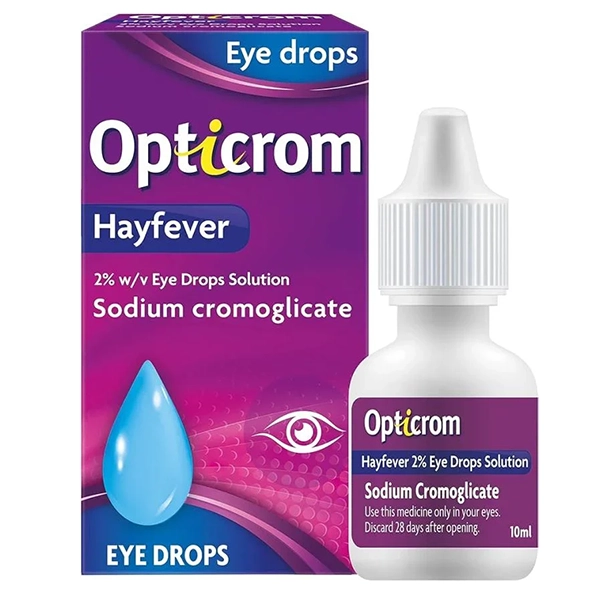
Opticrom Hayfever Eye Drops | Sodium Cromoglicate Eye Drops for Hayfever Eyes
Opticrom Hayfever Eye Drops are medicated eye drops used for the relief and treatment of eye symptoms caused by hay fever. They contain sodium cromoglicate 2% w/v, an anti-allergy medicine that helps reduce the release of substances involved in allergic reactions.
Key Features
- Helps relieve and treat hayfever eye symptoms.
- Suitable for itchy, red, watery or irritated eyes caused by pollen.
- Contains sodium cromoglicate 2% w/v.
- Can be used regularly during exposure to allergens.
Who Is This Product For?
Opticrom Hayfever Eye Drops are suitable for adults and children who experience seasonal allergic conjunctivitis, sometimes called hayfever eyes. Symptoms may include itchy, red, watery, swollen or irritated eyes caused by pollen from grasses, trees or other seasonal triggers.
How to Use
Use as directed in the patient leaflet. The usual dose is 1 or 2 drops in each eye 4 times daily. Wash hands before use. Gently pull down the lower eyelid, apply the drops into the eye and avoid touching the eye or eyelid with the bottle tip. Replace the cap after use.
Contact Lens Advice
Some sodium cromoglicate eye drops may contain preservatives that are not suitable for soft contact lenses. Remove contact lenses before use and follow the patient leaflet instructions before reinserting them.
Possible Side Effects
Some users may experience temporary stinging, burning, irritation or blurred vision after using the drops. Stop using the product and seek medical advice if symptoms worsen, persist or if you experience eye pain, changes in vision or signs of an allergic reaction.
Advisory
For use in the eyes only. Do not use if you are allergic to sodium cromoglicate or any of the other ingredients. Keep out of the sight and reach of children. If symptoms do not improve or worsen, speak to a doctor or pharmacist.
Storage
Store as directed on the packaging and patient leaflet. Do not use after the expiry date. Dispose of any remaining solution safely after the recommended period stated in the leaflet.
Patient Leaflet